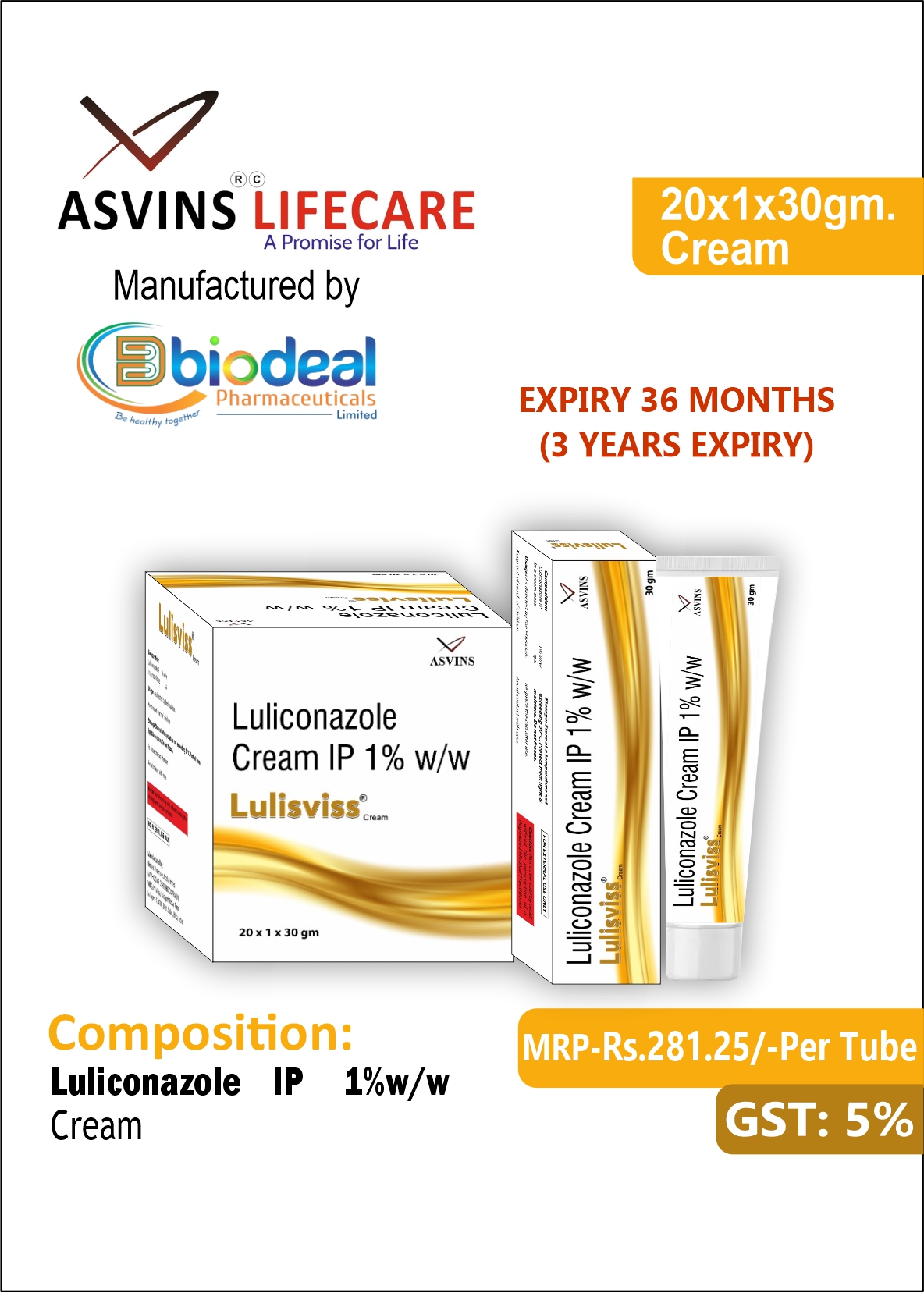
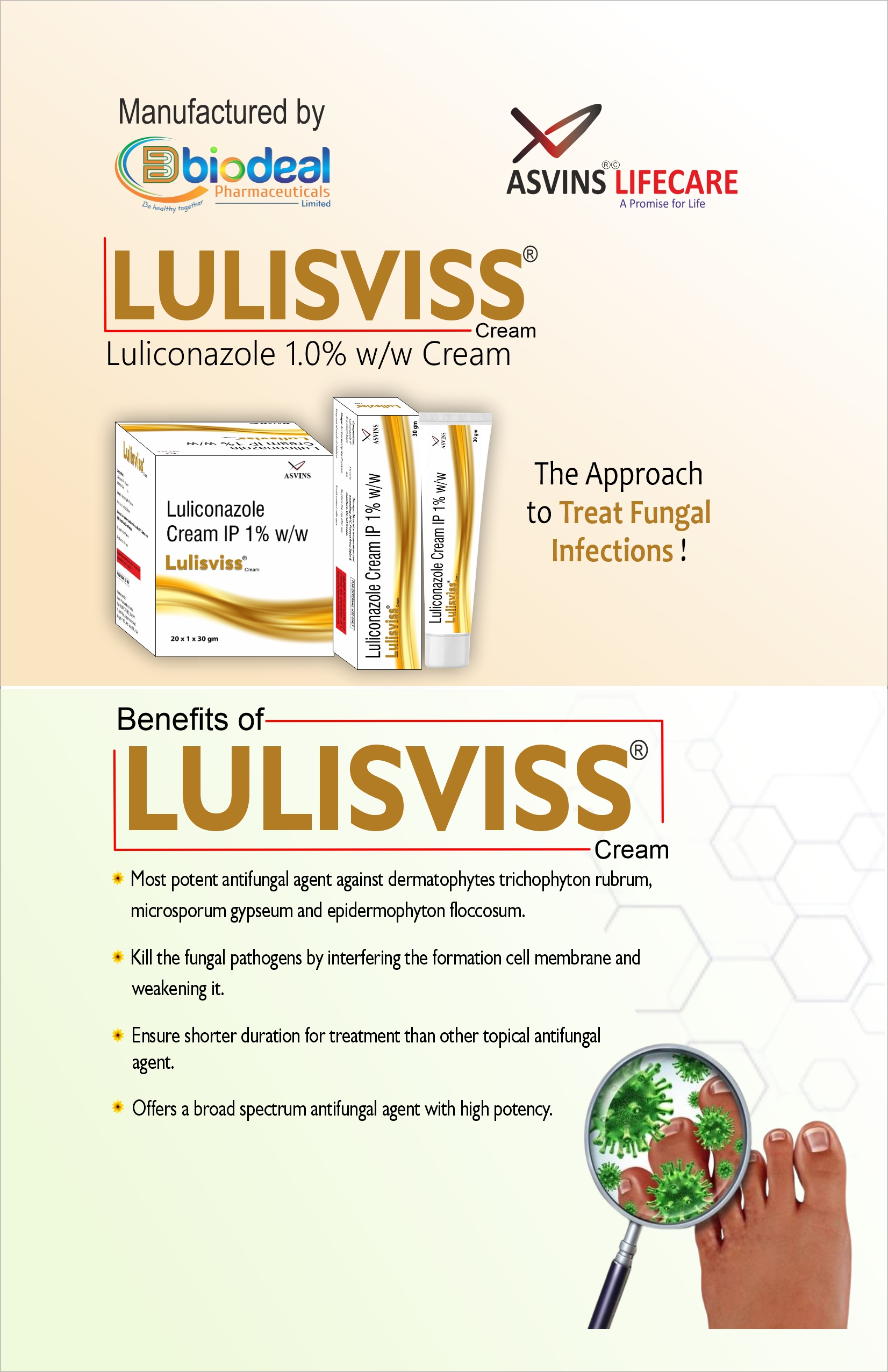

Luliconazole Cream – Lulisviss is an antifungal cream used in the treatment of fungal infections of the skin, such as ringworm, jock itch, and athlete’s foot. Fungal infection is a skin disease caused by a fungus that attacks the tissue and causes infection. Fungal infections may be contagious, that is, passed on to one another.
Composition:
Each gram of cream contains:
-
Luliconazole 1.0% w/w
Therapeutic Category/Class:
Topical Antifungal Agent
Working of Luliconazole Cream
Luliconazole works by inhibiting the synthesis of ergosterol, a key component of the fungal cell membrane. Ergosterol is an important component required for the structural activity of the fungal cell membrane. Without ergosterol, the cell membrane becomes weakened and leaky. This results in the death of the fungal cell and finally, the rise of the fungal infection.
Lulisviss is particularly used in the treatment of fungal skin infections such as ringworm, athlete’s foot, and jock itch. It is applied to the affected area in the form of a cream or solution. The cream gets into the skin through absorption and accumulates in the infected tissue, where it works to eliminate the fungal infection.
Uses of Luliconazole
An antifungal cream used in the treatment of specific fungal infection of the skin such as tinea pedis (athlete’s foot), tinea cruris (jock itch), and tinea corporis (ringworm).
Luliconazole is a broad-spectrum antifungal agent that is effective against various types of fungi, including dermatophytes, yeasts, and mold.
The cream is applied once or twice daily to the affected area of the skin, for 2 to 4 weeks, depending upon the severity of the infection. Even after the symptoms improve, it is important to keep applying the cream and complete the full course of treatment.
Lastly, Luliconazole is a safe and effective treatment option for fungal infections of the skin.
Directions to Use Luliconazole Cream
- Before applying the medicine, it is important to clean and dry the infection area.
- Apply a thin layer of the cream to the infected area and gently rub it in.
- Wash your hands properly after applying the cream so that the cream does not go into your eyes or mouth.
- Use the medication regularly as prescribed the doctor.
- Do not cover the infected area with bandage or other dressing unless prescribed by your healthcare provider.
Side Effects of Luliconazole Cream
Some of the common side effects are as follows –
- Itching
- Burning sensation at the applied area
- Skin redness
- Hives or Skin rash
- Skin peeling or dryness