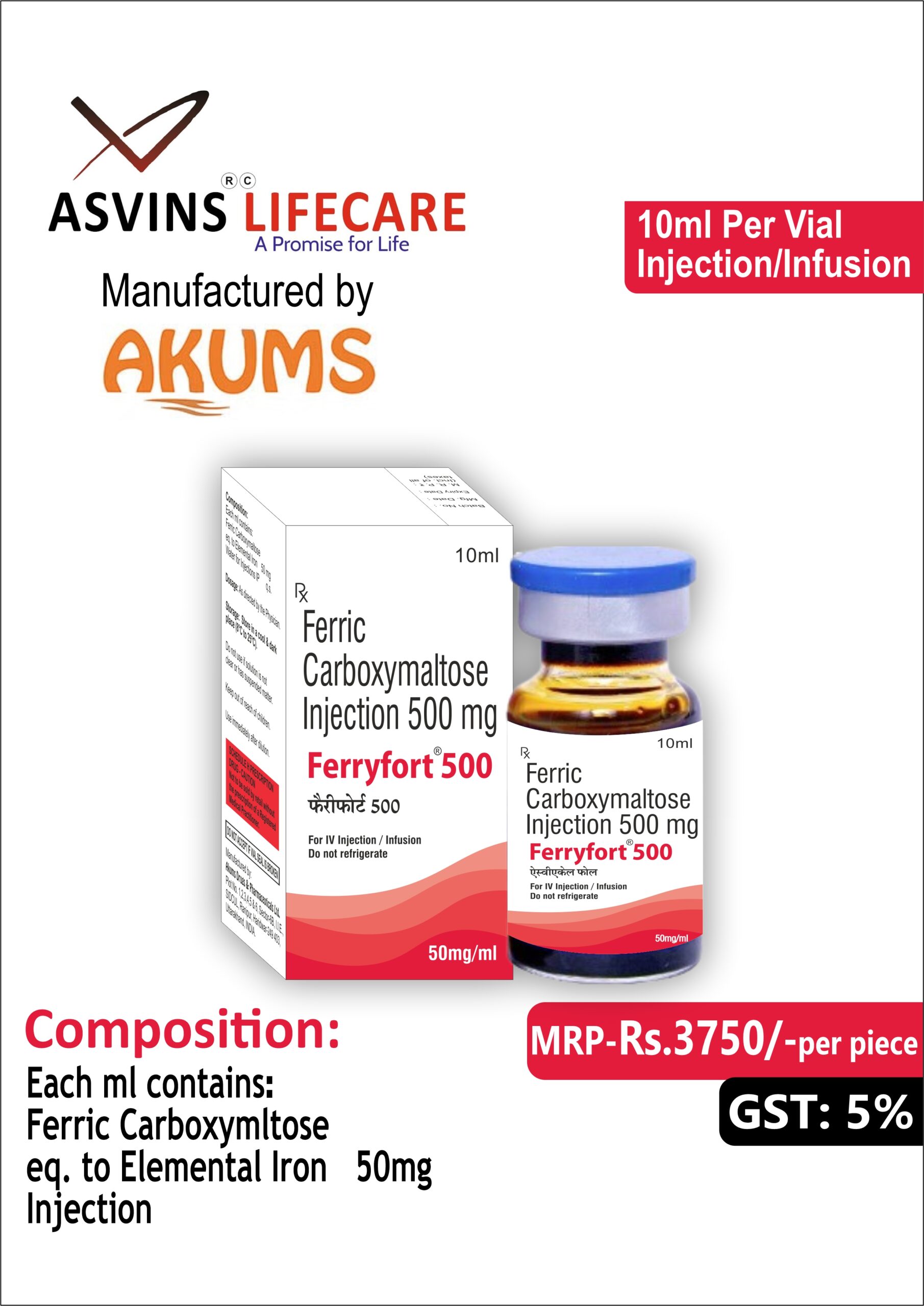
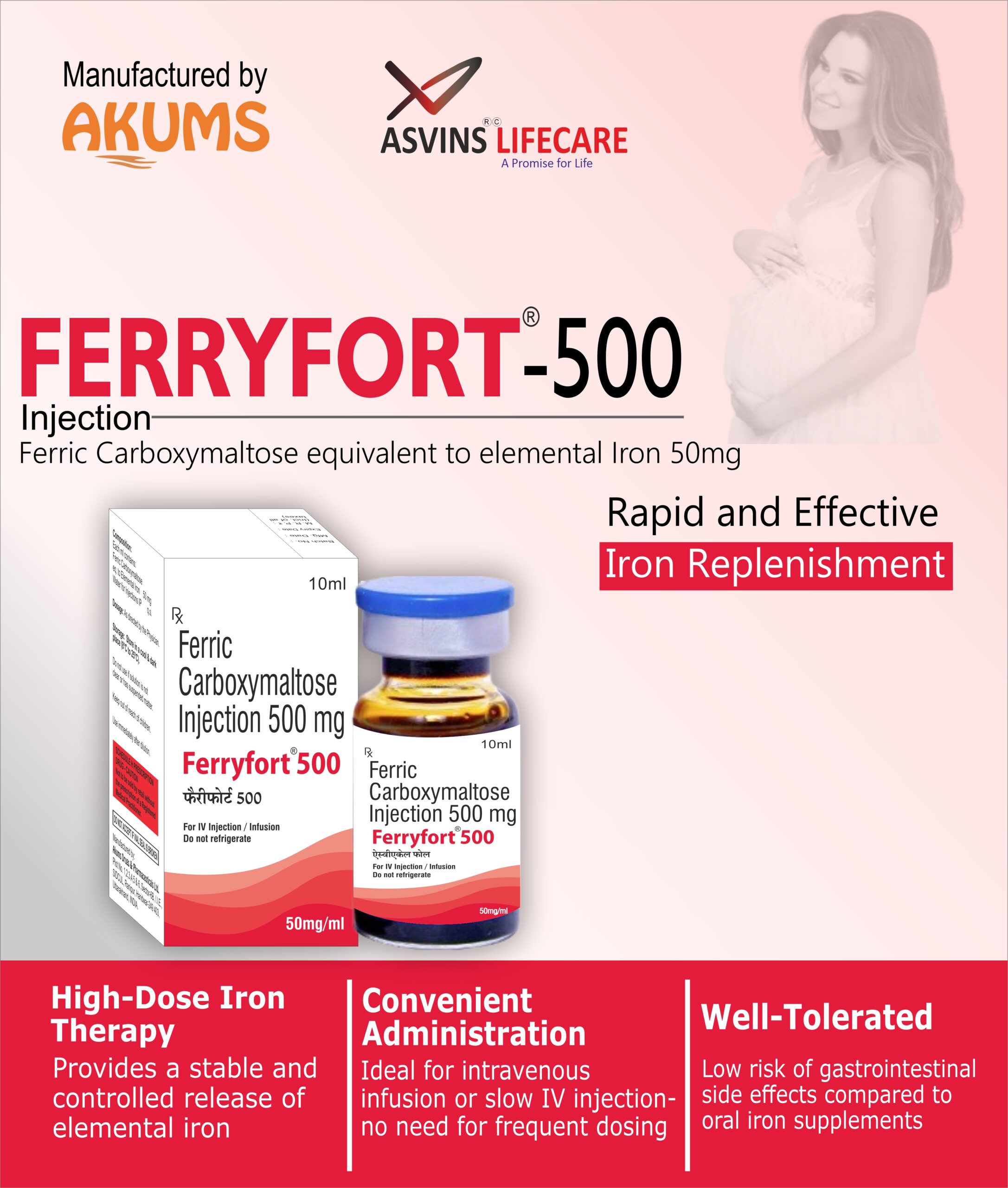
Ferric Carboxymaltose Injection– The injection is made up of the Ferric Carboxymaltose which is used in the treatment of Iron deficiency Anemia. Ferric Carboxymaltose is an anti-anemic medication. It replenishes the iron stores in your body. Iron is vital for the formation of new red blood cells and hemoglobin, a substance that gives these cells the ability to transport oxygen.
Uses of Ferric Carboxymaltose Injection
Anemia is a condition where your body doesn’t have enough red blood cells to carry oxygen around your body. This can happen if you don’t get enough iron from the food you eat. Ferric Carboxymaltose Injection is a medicine that helps to increase the number of red blood cells in your body. It is given as an injection by a doctor or nurse, usually in two doses 7 days apart. You should not have this medicine if your anemia is not caused by a lack of iron.
Precaution to use of Ferric Carboxymaltose Injection
Before taking Ferric Carboxymaltose Injection, tell your doctor if you have any health conditions, such as rheumatoid arthritis, asthma, allergies, high blood pressure, or liver problems. This is because these conditions may affect how you react to the medicine. It is not known whether this medicine is safe for use during pregnancy or breastfeeding. Please consult your doctor for advice.
You will need to have some tests done to check your blood cells and iron levels. These tests will help your doctor to monitor your progress and check for any side effects. It is advisable to limit your alcohol intake during treatment. Alcohol can interact with the medicine and cause side effects.
Direction to use of Ferric Carboxymaltose Injection
Ferric Carboxymaltose Injection is given as an injection or infusion into a vein by a doctor or nurse. You will be monitored closely to make sure you do not have an allergic reaction. It is usually given in two doses, 7 days apart. Your doctor will decide how much and how often you need injections to improve your anemia. Eating a healthy diet that includes enough iron, vitamins, and minerals can help to replenish your iron stores. Good sources of iron include meat, eggs, raisins, broccoli, and lentils.
Possible Side Effects of Ferric Carboxymaltose Injection
The most common side effects of this medicine are vomiting, headache, dizziness, high blood pressure, and pain or irritation at the injection site. Most of these side effects usually go away on their own within a short time of the injection. If you are bothered by any of these side effects or they go on for longer, talk to your doctor or nurse. You should not have this medicine if your anemia is not caused by a lack of iron. Some of the common side effects are :
- nausea
- vomiting
- changes in taste
- headache
Frequently Asked Questions (FAQ’s):
1. What is Ferric Carboxymaltose Injection?
Ferric Carboxymaltose Injection is an intravenous iron preparation used to treat iron deficiency when oral iron is ineffective or unsuitable.
2. What is Ferric Carboxymaltose Injection used for?
It is used to restore iron levels in people with iron deficiency anemia caused by conditions such as chronic kidney disease, heavy blood loss, or poor iron absorption.
3. How is Ferric Carboxymaltose Injection administered?
It is given by a healthcare professional through an intravenous infusion or slow intravenous injection.
4. Who may need Ferric Carboxymaltose Injection?
It is recommended for patients who cannot tolerate oral iron, do not respond to oral supplements, or require rapid iron replacement.
5. How quickly does Ferric Carboxymaltose Injection work?
Iron stores begin to replenish within a few days, while improvement in hemoglobin levels is generally seen within 2–4 weeks.
6. What are the common side effects of Ferric Carboxymaltose Injection?
Common side effects include headache, nausea, dizziness, injection site reactions, flushing, and mild changes in blood pressure.