
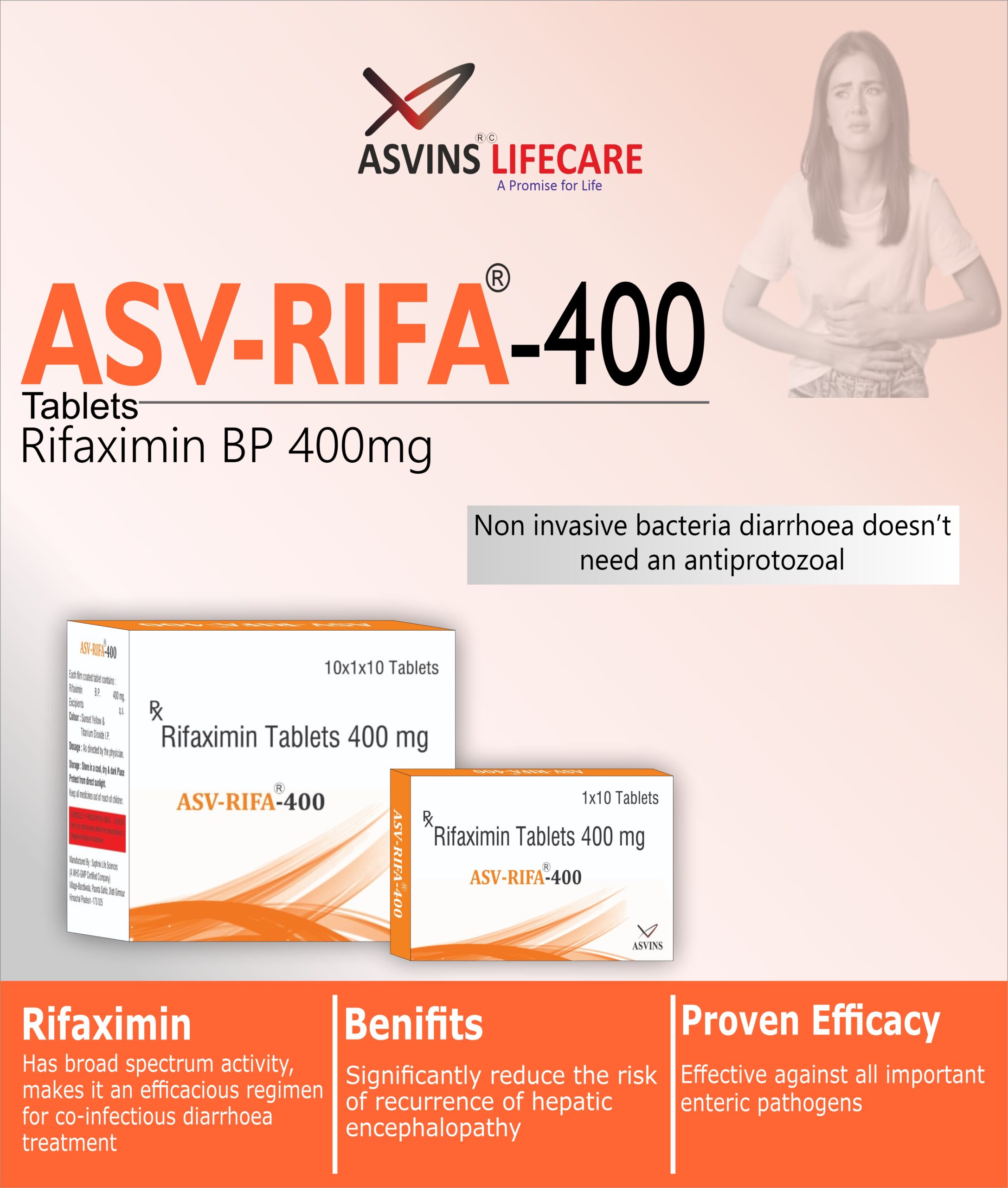

ASV-RIFA 400 mg Tablets is composed of Rifaximin, which is an antibiotic and is very used in hepatic encephalopathy. The amazingly effective treatment that this medicine offers for hepatic encephalopathy is to kill the ammonia-producing bacteria, and it is effective at relieving symptoms of infection, including muscle problems, agitation, and confusion. It has also been useful in IBS-D (irritable bowel syndrome – diarrhea) and inhibits the proliferation of bacteria that are responsible for the diarrhea in your gut.
Hepatic encephalopathy occurs when the liver is ill and the body no longer removes the poison from the blood stream and has trouble keeping the brain functioning properly. IBS is an issue related to the large intestine. Rifaximin Tablet is used to relieve upset tummy and looseness of the bowels. Rifaximin 400mg Tablet is contraindicated for diarrhea in cases of fever, stool containing blood, or if diarrhea is caused by germs other than E. coli (Escherichia coli).
Uses of Rifaximin 400 Mg Tablets
- Rifaximin Tablet belongs to the class of antibiotics. It is used for the treatment of irritable bowel syndrome (IBS), a brain dysfunction disorder, and traveler’s diarrhea.
- Rifaximin Tablet treats diarrhea caused by certain types of E. coli; Rifaximin Tablet is an antibiotic drug that can be effective against many types of bacteria, including alkaliphiles, anaerobic species, and Gram-positive, oxygen-dependent species.
- Rifaximin Tablet belongs to the group of antibiotics that are mainly effective in the stomach and intestines.
- Has a broad spectrum of antibacterial activity. Rifaximin tablets are used to kill bacteria, which can cause infections. So, it can be of great help getting rid of infections and preventing their spread.
Precautions to use for Rifaximin 400 mg Tablets
- Rifaximin Tablet is not to be used in the case of a fever, more formed stools in 24 hours, blood in stools, vomiting, abdominal pain, or constipation due to a blocked bowel in the 24 hours before using the tablet, or if you are allergic to the tablet or any of its ingredients.
- Call your doctor if you do not improve, if symptoms don’t improve, or if they get worse after 3 days of Rifaximin.
- Not more than 3 days of Rifaximin tablets should be taken without the physician’s advice. If you don’t feel better, talk to your doctor. Don’t take Rifaximin Tablets if you’re pregnant or breastfeeding.
- Check with your doctor—they may be able to prescribe a different medication. Rifaximin tablets should not be recommended for children below 12 years of age, as safety and efficacy have not been established.
- Inform your doctor about your health problems and any medication you’re using to prevent any earlier medication side effects. Those who have liver issues should avoid using Rifaximin tablets or consult their physician.
- Take Rifaximin 400 mg tablets as your doctor prescribed. Follow your doctor’s instructions for taking Rifaximin 400 mg tablets.
- You can use this medicine by itself or with other medicines. It can be taken on an empty stomach or with food; it is best to take it at the same time each day. Follow the doctor’s instructions in terms of dosage and duration of use. For best results, take it at the same time each day, and continue taking the medicine for as long as your doctor recommends. Early termination of treatment may result in recurrent infection, which is more difficult to correct.
Side Effects
The most common side effects of Rifaximin tablets are listed below:
- Headache
- EdeMA in the legs (peripheral edema)
- Nausea
- Dizziness
- Fatigue
- Presence of extra fluid in the abdomen (ascites)
- High blood enzyme levels (ALT)
FREQUENTLY ASKED QUESTIONS (FAQ)
Is the diarrhea treatable with Rifaximin 400 mg?
Yes. Used to treat traveler’s diarrhea, which is caused by certain bacteria, and some other stomach illnesses. Did not work for everyone with diarrhea.
Does Rifaximin contain an antibiotic?
Yes. Rifaximin is an investigational antibiotic indicated primarily in the intestinal tract for the treatment of certain infections caused by bacteria.
May I take Rifaximin with food?
Yes. Usually it is taken with or without food, or as advised by the healthcare provider.
What is the time of its action, and how long does it take?
While some patients see improvement in days, it’s recommended to take the full course of treatment for maximum results.
Can long-term treatment with Rifaximin be used?
In rare cases of prevention of recurrent hepatic encephalopathy, extended treatment may be recommended within the regular oversight of a healthcare provider.